
This long-term photographic project documents living folk dress in Rättvik's Council through monthly portrait sessions with different individuals wearing traditional costume in their own local setting. The work unfolds over the course of a year, following seasonal change and focusing on the act of wearing the dress, its material presence, and its relationship to place.
The project centres on three locally rooted costumes: the Rättvik costume, the Boda costume, and the Ore costume. It functions both as a process of photographic development and as a form of visual fieldwork, contributing to a contemporary record of living dress traditions as they are practised today.
January
Herrdräkt från Boda
Mattias Hällström
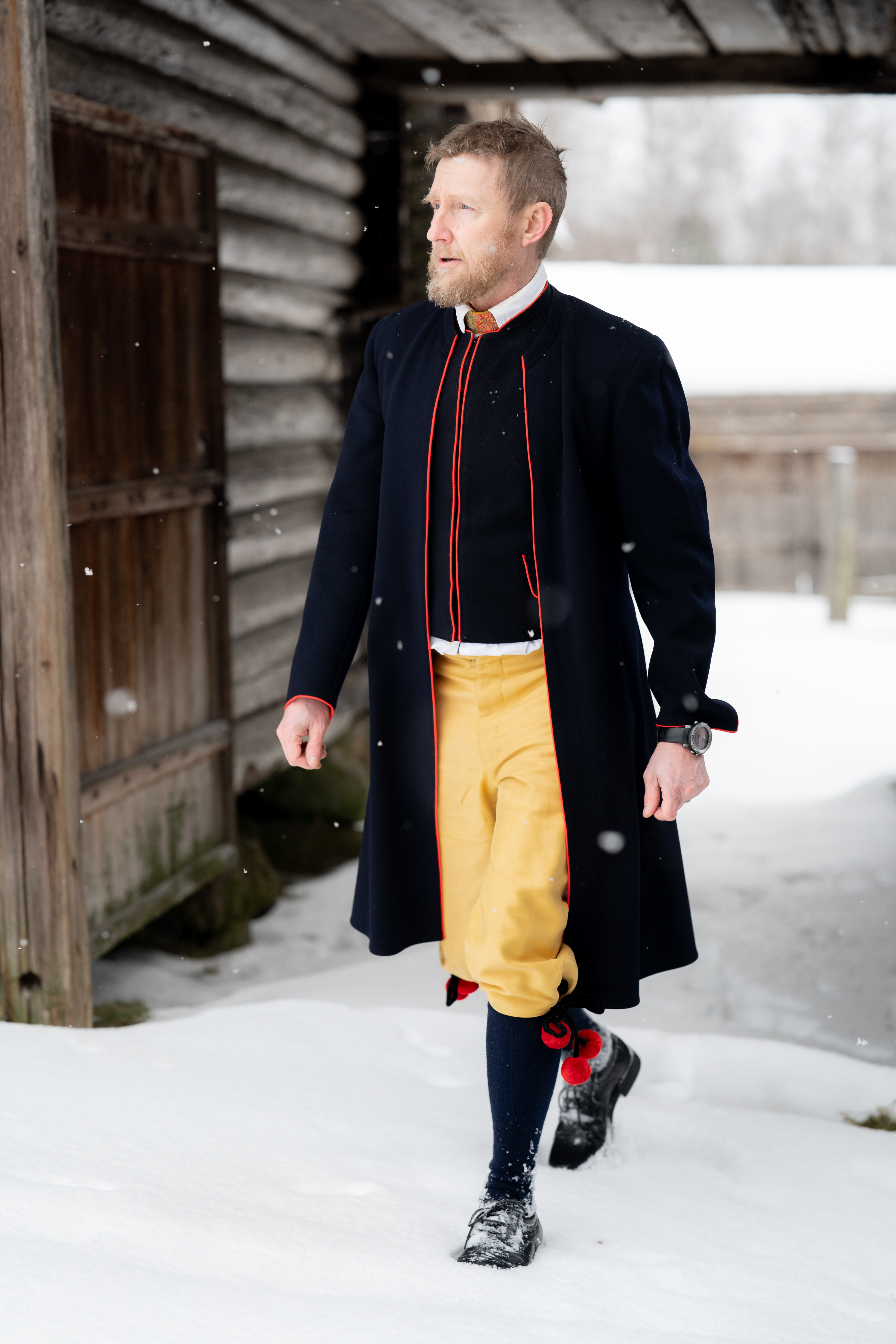
I inherited the costume around 2020 from my great-uncle, who was a fiddler in the Boda spelmanslag. Today, the costume is worn on ceremonial occasions and continues to be passed down within the family. The ruff at the collar is a significant element of the costume and a clear example of the craftsmanship involved in the dress tradition. For me, it is important that the costume continues to be worn, rather than preserved only as an object.
- Mattias Hällström
February
Damdräkt från Rättvik
Marit Hjort
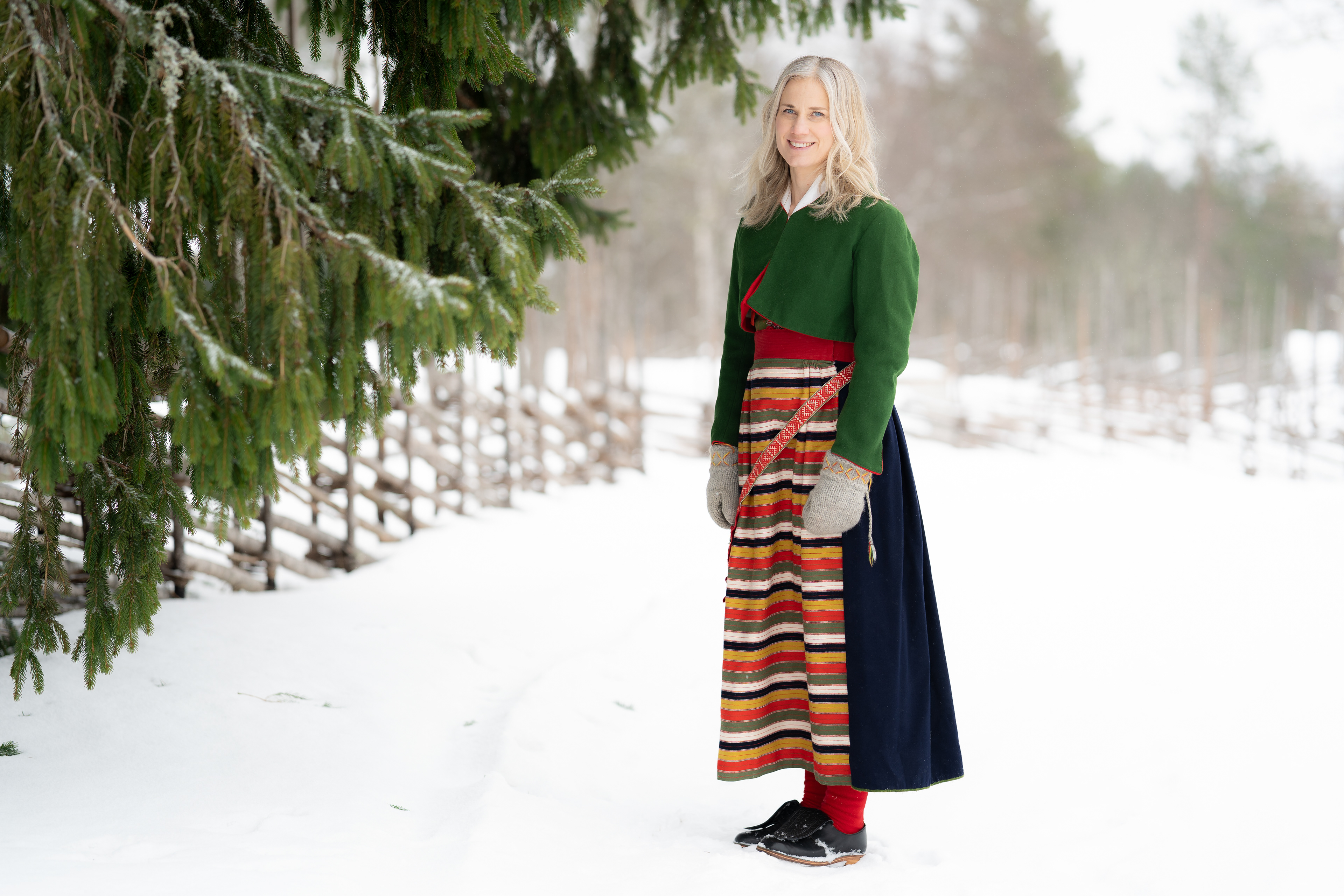
I first began wearing the costume when I played the fiddle in a local folk music group, and today I wear it on ceremonial occasions and at Midsummer. The costume was sewn by my grandmother and has been part of my life ever since. Wearing it is a way of carrying her with me; she meant a great deal to me, and I feel that by continuing to wear it, I honour her. For me, the costume is about keeping both the craftsmanship and the tradition alive, for myself and for the generations that follow.
- Marit Hjort
March
Damdräkt från Boda
Moa Jannes
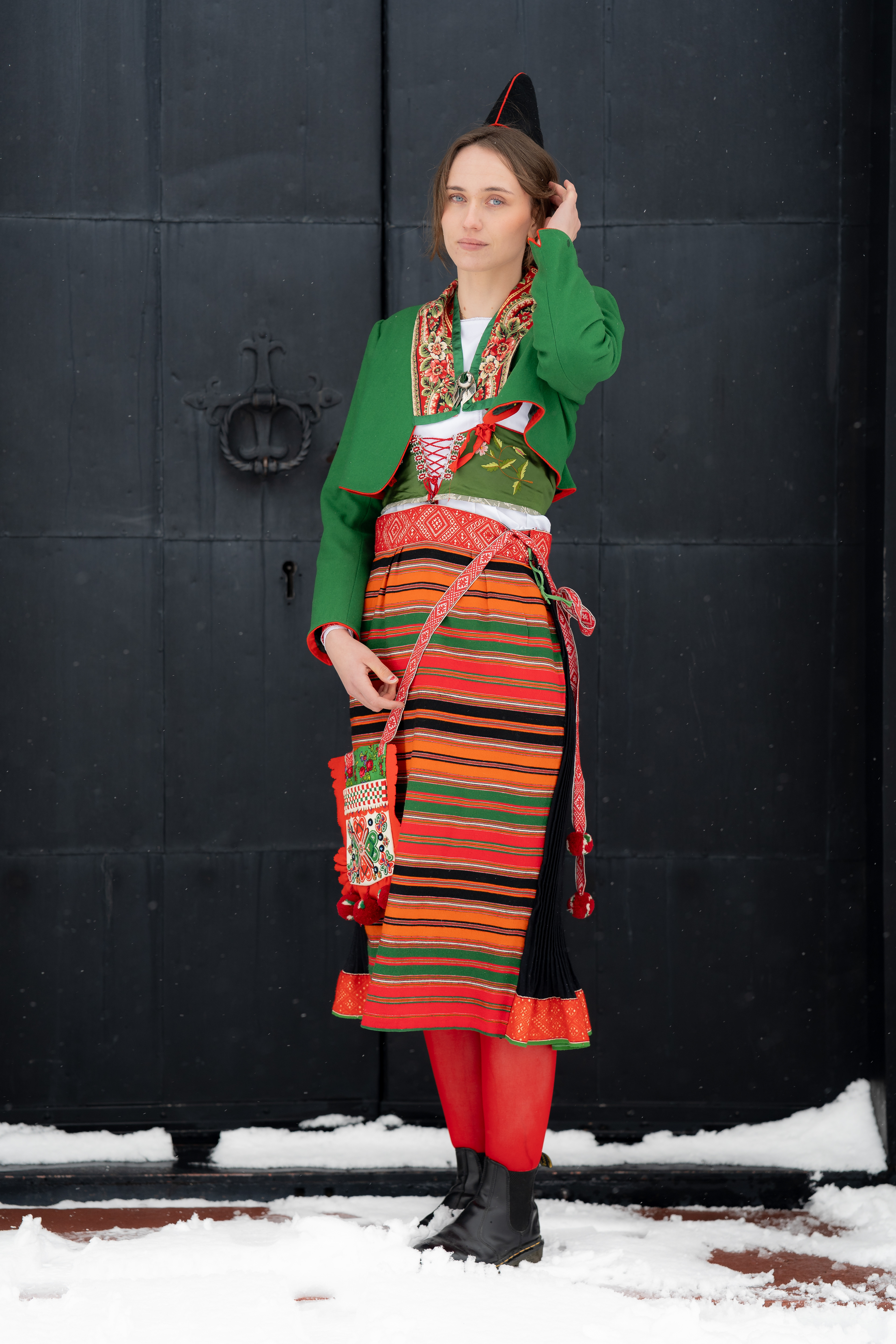
I first wore the costume at my son’s christening. It has been worn by several women in my family, and for me it stands as a tangible expression of heritage and of the careful craftsmanship contained in every detail. The skirt is especially significant, marking the parish to which one belongs and recalling a time when such dress was worn not only for ceremony, but in everyday life. When I put it on, I feel a closeness to those who wore it before me, and it matters to me that the costume remains something lived in, rather than simply preserved.
- Moa Jannes